Phnom Penh: your questions answered
Where to stay, how many days, what it costs and what to see in Phnom Penh — 8 straight answers, each with the hotels it names. Updated 2026.
How to find a good hotel in Phnom Penh
Read reviews carefully—check the number of reviews before the rating, since a hotel with hundreds of reviews is more reliable than one with...
How much does a hotel cost in Phnom Penh?
Hotel prices in Phnom Penh range from $3 to $600 per night depending on the property type and location. Budget options start around $10–$20...
Best hotels in Phnom Penh for families
Family travellers have several choices across Phnom Penh, from budget-friendly options starting at $10 per night to mid-range hotels. Look f...
Cheap hotels and hostels in Phnom Penh: sleeping on a budget
Budget accommodation in Phnom Penh ranges from $3 to around $25 per night across hostels, guest houses, and budget hotels. The city has 11 h...
When is the best time to visit Phnom Penh?
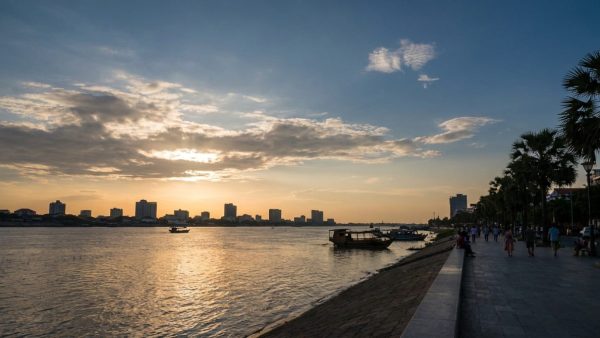
The best time to visit Phnom Penh is the **dry season from November to April**, when the weather is cool and clear for sightseeing. The rain...
Where to stay in Phnom Penh?
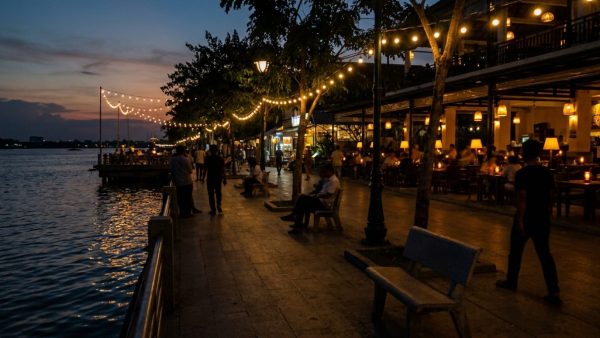
Phnom Penh has 266 listed accommodations ranging from budget hostels and guest houses to mid-range hotels and resort options, with nightly r...
What is the best area to stay in Phnom Penh in 2026?
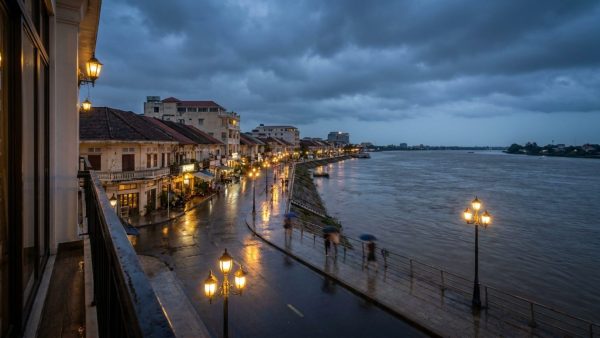
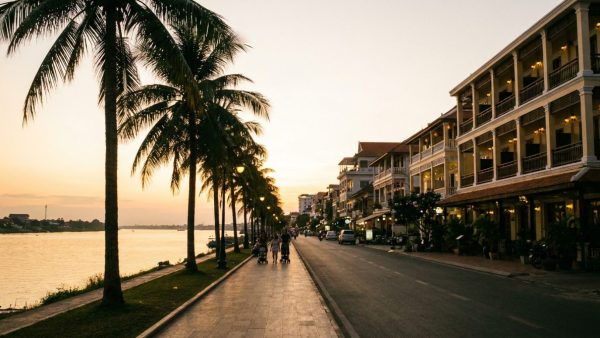
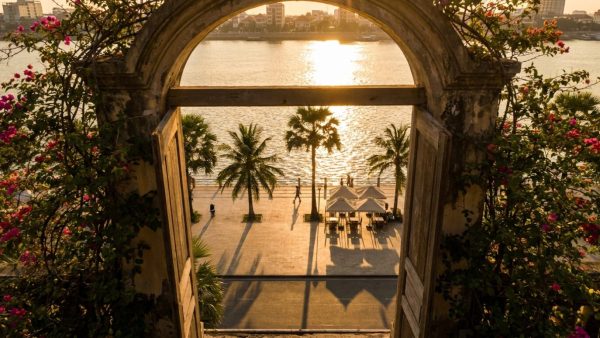
The riverside along Preah Sisowath Quay offers the best combination of location, amenities, and views for most travellers. The central neigh...
Phnom Penh in 3 days: what to see and where to stay
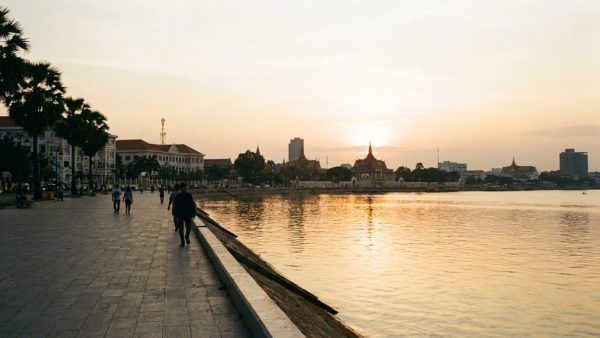
Spend three days exploring Phnom Penh's riverside culture, museums, and food scene, staying in the central districts near Preah Sisowath Qua...
Phnom Penh, beyond the stopover
Phnom Penh sits where the Mekong, the Bassac and the Tonlé Sap rivers meet, which is why it exists at all. It is loud, fast, hot and far more elegant than its reputation: French colonial villas, a golden royal palace, riverside promenades and a food scene that has quietly become the best in Cambodia.
The two mornings that matter
Give one morning to the Royal Palace and the Silver Pagoda, then the National Museum next door, which holds the finest Khmer sculpture anywhere and explains everything you are about to see at Angkor. Go at opening; both are outdoor-ish and become punishing by eleven.
Give the other to Tuol Sleng and Choeung Ek. They are not a sightseeing stop and should not be treated as one — take the audio guide, allow half a day, and plan nothing demanding afterwards. Understanding what happened here between 1975 and 1979 is not optional context for a country where nearly everyone over fifty lived through it.
Where to base yourself
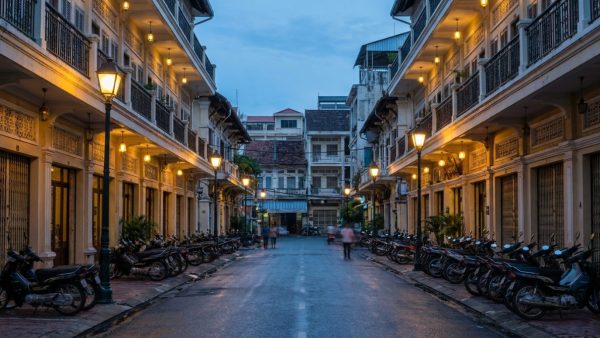
Riverside (Sisowath Quay) puts you next to the palace and the promenade, at the price of noise. Daun Penh, one street back, keeps the location and loses the bass. BKK1 is the leafy embassy district — quieter, better restaurants, a ten-minute tuk-tuk from everything. Toul Tom Poung, known as Russian Market, is where the independent cafés, tailors and design shops are, and where a longer stay makes most sense.
Eating
Start with breakfast kuy teav, the pork-broth noodle soup Cambodians eat before seven. Then work through the Khmer restaurants around BKK1 and the street grills of Toul Tom Poung. The capital also has the country’s only serious international dining, largely because of its diaspora and NGO population — you can eat superb Khmer food at lunch and excellent Japanese or French at dinner without moving neighbourhoods.
The river at six
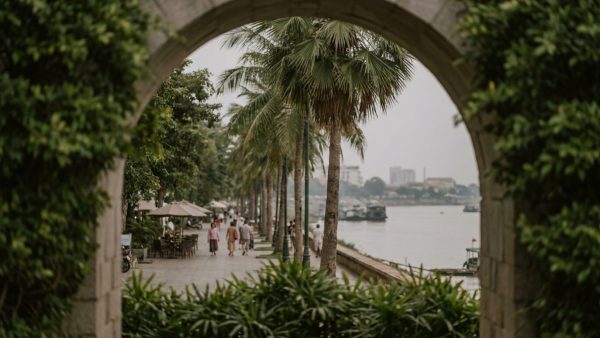
The single best free thing in the city. As the heat breaks, the whole riverside fills with families, aerobics classes, food carts and kite sellers. An hour-long sunset boat out to the confluence costs a few dollars a head and gives you the skyline, the palace roofline and the two rivers meeting in one go.
A half-day out
Koh Dach, the silk island, is thirty minutes north by tuk-tuk and ferry: weaving villages, sandbank beaches in the dry season and a rural Cambodia that starts unreasonably close to a city of two million.
Frequently asked questions
Is Phnom Penh safe at night?
Broadly yes, with normal city caution. Bag snatching from passing motorbikes is the one real risk — carry your bag on the pavement side, or not at all.
How do I get to Siem Reap?
A 45-minute flight, a six-hour day bus on a good road, or a slower but scenic boat in high water. The day bus is the best value.
Book instantly with our partner hotels
Live availability, confirmed straight away, cash or card.